
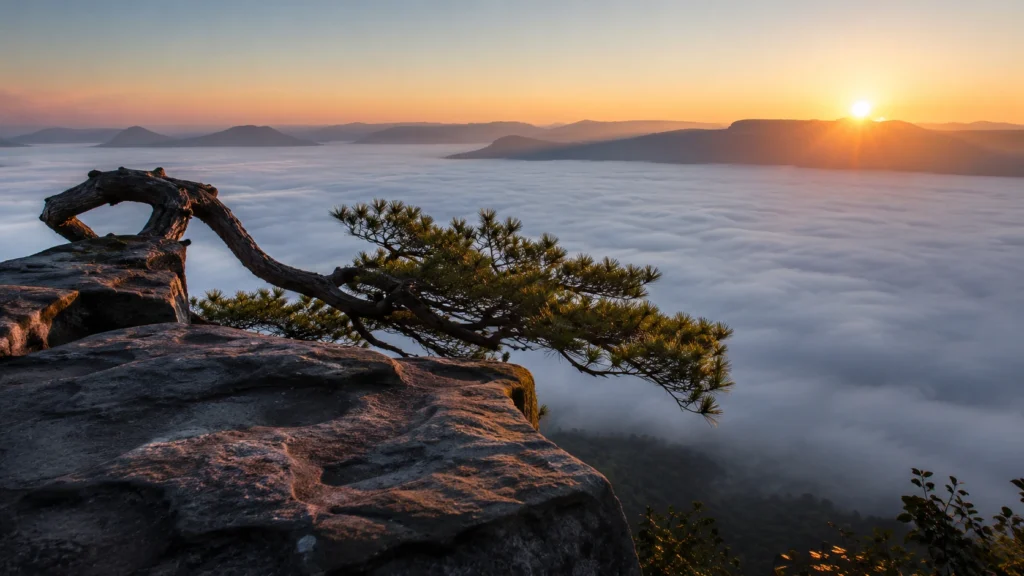
Filming in Loei puts a production somewhere Thailand rarely lets you go: a cool, upland province on the Mekong where pine ridges, river mist and a preserved timber town sit inside a single unit move. Loei is the north-western corner of Isaan, pressed against the Laos border, and it works at a different temperature and a different pace from the coasts and the capital. For a location manager chasing a look that reads as highland Asia — elevation, fog, cooler light, unpainted teak — it is one of the most under-used provinces in the country, and one of the easiest to keep clean of modern intrusion.
We build Loei schedules the way we build every up-country shoot: from Bangkok outward, with a bilingual crew, a permit stack filed through the Thailand Film Office, and a clear read on the weather window. This guide is written for the location manager, scout and line producer weighing Loei against the busier northern hubs, and it sits alongside our Isaan location guide, which frames the wider northeast.
Why filming in Loei rewards a scout
Loei’s advantage is climate and character. It is the coolest province in Thailand by reputation, with genuine cold snaps in the highlands during the cool-dry months and a year-round temperature that runs several degrees below the central plains. That means longer comfortable working hours for cast and crew, and a natural mist on the river and the ridges that most Thai locations simply cannot offer.
The province also holds its period texture. Riverside towns here kept their timber shophouses and their slower streetscape, so a scout can frame a quiet Mekong town without a wall of concrete and signage in the background. Add pine-clad plateaus, working farmland, and a border river with Laos rising on the far bank, and Loei gives a director range that usually requires three separate locations to assemble.
Filming in Loei: Chiang Khan and the Mekong corridor
Chiang Khan is Loei’s signature location. Its old quarter is a long, walkable street of preserved timber shophouses running parallel to the Mekong, with morning-alms processions, riverside boardwalks and a low, human-scale skyline. Shot early, before the day market wakes, it reads as a timeless Southeast Asian river town — a rare backdrop for prestige drama, documentary and heritage-led commercial work.
The Mekong itself is the second asset. The river forms the province’s northern edge, giving wide brown water, sandbars, fishing boats and misty dawns, with Laos as a natural far-bank backdrop. Dawn on the Mekong — low fog, a single long-tail boat, the far shore emerging — is a signature look, and it schedules cleanly around a first-light call. Because this is an international border, we keep river-adjacent and any drone work inside the permit and security framework from the first recce, not as an afterthought.
Highlands: Phu Kradueng, Phu Ruea and cooler light
Loei’s uplands are its other headline. Phu Kradueng is a high, flat-topped plateau reached on foot — pine forest, cliff-edge viewpoints and a genuine sea of mist at dawn, inside a national park with its own seasonal opening and access rules. It is a committing location logistically, so we scout it early and plan the porter, power and camera-movement package around the climb rather than assuming vehicle access.
Phu Ruea and the surrounding hills are the accessible highland alternative: pine ridges, cool-climate farms, flower and vineyard estates, and viewpoints that catch the same morning fog with far less carry. Together they give a production elevation, evergreen forest and cooler working temperatures that double convincingly for temperate Asia — a look most of Thailand cannot supply.
Culture, festivals and the Loei calendar
Loei carries a strong cultural identity, and its festival calendar is unusually cinematic. The province is known for a masked spirit festival built around carved wooden masks, vivid costume and processional energy — a documentary and cultural-film subject in its own right, and a texture that a scout should be aware of when timing a visit. Festival filming carries its own access, community-consent and scheduling considerations, and we treat those the way we treat any culturally sensitive shoot: negotiated in advance, with local liaison, never presumed.
Away from the festival dates, the everyday texture holds up: temple compounds, upland farms, riverside markets and hill villages give a director naturalistic backgrounds and a working population accustomed to visitors but not to constant crews. That balance — character without saturation — is exactly what makes the province worth the drive.
Permits for filming in Loei
Loei follows the national permit architecture with provincial and site layers on top. Foreign productions file through the Thailand Film Office, which coordinates the national film permit and any incentive application; our Thailand film permit guide sets out the full process. On the ground, Loei then adds provincial coordination and, for specific sites, further approvals.
Two site categories need early attention. National-park locations such as Phu Kradueng and Phu Ruea sit under the Department of National Parks, which sets its own access windows, unit-size limits and conservation conditions. Temple, heritage and any protected structures fall under Fine Arts and local temple committee approval. Because Loei is a Mekong border province, river and aerial work also involve a security dimension. We map every one of these layers at the recce stage and file them in parallel, so approvals land together rather than stacking into the schedule.
Crew and equipment for filming in Loei
Loei is a location province, not an equipment hub, so we resource it the way we resource all up-country work: a core bilingual crew and camera, lighting and grip package travelling from Bangkok, topped up with the northern crew base out of Chiang Mai when it shortens the road. Specialist departments — camera, key grip, gaffer, sound — travel with the show; local hires cover additional grip and electric, production assistance, transport, security and community liaison, which is also the fastest route through provincial coordination.
For foreign-owned kit, the standard route is an ATA Carnet, arranged before arrival so equipment clears customs cleanly and re-exports without friction. Drones, wireless video and any specialist rigs need their approvals sequenced in advance, and doubly so this close to an international border. Our location scouting in Thailand service and our equipment desk plan the kit list against Loei’s roads and the highland carries, so nothing arrives that the terrain cannot support.
Best time for filming in Loei
The cool-dry window is Loei’s headline season: clear skies, the coldest temperatures in Thailand, and the morning mist on the river and the ridges at its most reliable. It is also the busiest domestic-tourism window in Chiang Khan and the highlands, so we lock locations, crew and accommodation early and shoot the sensitive exteriors at first light before footfall builds.
The green season brings dense forest, full rivers and dramatic cloud, at the cost of afternoon rain that has to be scheduled around. The hot months push midday temperatures up even in the highlands, where the elevation still gives real relief. One regional caution matters: like much of the north and northeast, Loei can be affected by agricultural-burning haze in the late-dry-season weeks, which softens the highland vistas — we build that risk into any late-season plan. For the national picture, see our guide to the best time to film in Thailand.
The cash rebate and the secondary-provinces push
Thailand runs a cash-rebate incentive for qualifying foreign productions, administered by the Thailand Film Office under published criteria that the cabinet updates from time to time. As a TFO-registered production service company, we prepare and file the incentive application on a production’s behalf and reconcile the qualifying-spend documentation; the mechanics live in our Thailand film incentive 2026 guide. We keep specific percentages and thresholds out of a location page on purpose, because they move — the guide carries the current detail.
Loei is well placed for where the incentive is heading. Thailand’s film body has signalled a push toward secondary provinces and secondary cities, and toward weighting Thai employment and local economic value — the review announced in mid-2026 pointed in exactly that direction, though no rates or thresholds had changed at the time of writing. A province like Loei, filmed with a substantially Thai crew and local spend, sits naturally inside that direction of travel. We confirm the current terms against the TFO before any commitment.
Filming in Loei with Overgrown Productions
We are a Bangkok-based, TFO-registered, full-service production company with more than fifteen years and over four hundred productions behind us, for clients including Netflix, Vice, Al Jazeera, Reuters, the United Nations, Universal and Warner Music. Recent credits include the US feature Contra, shot in Bangkok in 2025, and the global motorsport series Lollipop Racing. That range — scripted feature, long-form documentary, branded and commercial — is the crew depth an up-country province like Loei needs travelling in.
For a production, that means one accountable partner from recce to wrap: scouting and options, the full permit stack, a bilingual crew, equipment and carnet, highland and river logistics, community liaison, and the incentive filing. Loei rewards a production that plans it properly — the weather window, the national-park access, the border-river approvals — and that planning is exactly what we do.
Frequently asked questions about filming in Loei
Where is Loei and how do crews reach it?
Loei is in Thailand’s far north-west Isaan region, on the Mekong border with Laos. Most productions travel in from Bangkok by road, or route through the northern crew base at Chiang Mai when that shortens the drive; the province has a regional airport for lighter units.
What are Loei’s signature filming locations?
The preserved timber riverside town of Chiang Khan, the Mekong corridor with its dawn mist and sandbars, and the highland plateaus of Phu Kradueng and Phu Ruea with pine forest and a sea of mist. Together they give river, town and cool-climate highland in one province.
Why is Loei’s climate an advantage for filming?
Loei is among the coolest provinces in Thailand, with genuine cold snaps in the highlands during the cool-dry season and lower temperatures year-round than the central plains. That means longer comfortable working hours and reliable morning mist on the river and ridges.
What permits are needed for filming in Loei?
Foreign productions file the national film permit through the Thailand Film Office, then add provincial coordination in Loei. National-park sites such as Phu Kradueng and Phu Ruea require Department of National Parks approval, temples and heritage require Fine Arts and local approval, and river or aerial work near the border adds a security layer.
More questions about filming in Loei, Thailand
When is the best time to film in Loei?
The cool-dry season gives the clearest skies, the coldest temperatures and the most reliable mist, but it is also the busy domestic-tourism window, so lock locations early. The green season brings lush forest with afternoon rain; late-dry-season weeks can carry agricultural-burning haze that softens highland views.
Can we bring foreign camera equipment into Loei?
Yes. Foreign-owned kit typically enters Thailand under an ATA Carnet arranged before arrival, and travels up-country with the crew. Drones, wireless video and specialist rigs need their approvals sequenced in advance, which matters more here given the international border.
Is Loei eligible for Thailand’s film incentive?
Loei productions apply under the same national cash-rebate scheme administered by the Thailand Film Office, subject to the published qualifying criteria. As a TFO-registered service company we prepare and file the application; a substantially Thai crew and local spend also align with the incentive’s secondary-provinces direction. Current terms should be confirmed against the TFO before commitment.
Do you provide crew and fixers in Loei?
Yes. We travel a core bilingual crew and camera, lighting and grip package from Bangkok, add northern crew from Chiang Mai when useful, and hire locally for additional grip and electric, transport, security, production assistance and community liaison — the fastest route through provincial coordination.
Plan a Loei shoot with our Bangkok team
If you are a location manager, scout or line producer weighing Loei for a feature, series, documentary or commercial, we can turn the province’s cool highlands and Mekong towns into a workable schedule — scouting, permits, bilingual crew, equipment and the incentive filing, managed end to end from our Bangkok office. Write to us at info@overgrownproductions.com with your dates, format and the look you are after, and we will come back with locations, a permit read and an approach.
External references: Thailand Film Office incentive measures and the Department of National Parks. Our full guide to filming locations in Thailand sets this in context.